
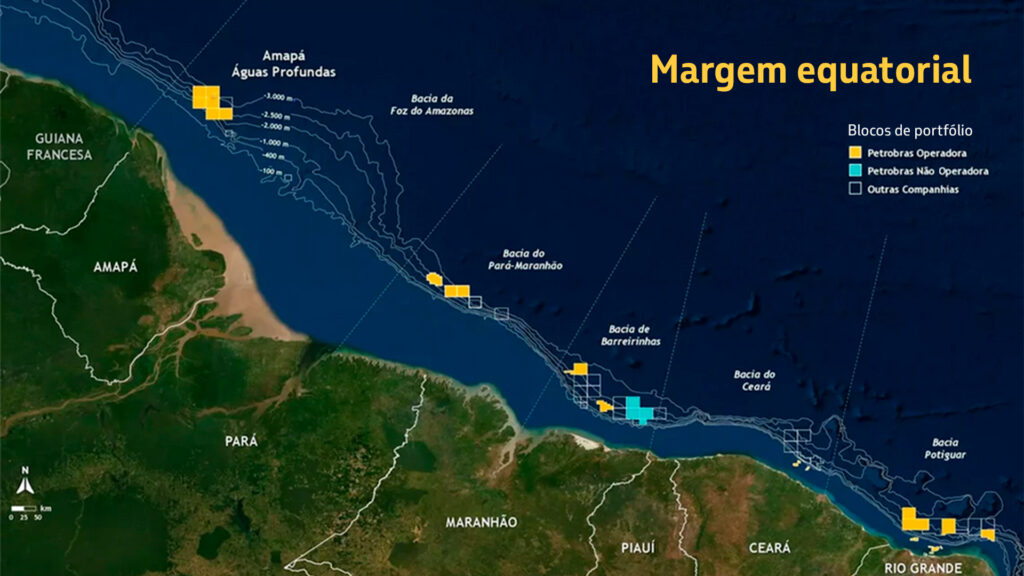
MACAPÁ, Brazil — A high-stakes environmental and political battle is unfolding at the mouth of the Amazon River. Following intense pressure from the highest levels of the Brazilian government, the state-owned energy giant Petrobras has commenced exploratory drilling in the hyper-sensitive Equatorial Margin.
The operation has ignited a firestorm of criticism from the global scientific community. Oceanographers and environmentalists warn that the drilling site—known as Block FZA-M-59—stands less than 40 kilometers (25 miles) from the Amazon Reef, a vast, biologically anomalous underwater ecosystem tat researchers are still rushing to fully understand.
The Political Arm-Twist
For years, Brazil’s federal environmental regulator, IBAMA, steadfastly denied Petrobras the necessary prospecting licenses, citing the catastrophic risks an oil spill would pose to the region’s delicate mangrove belts and unique marine life.
However, in October 2025, IBAMA abruptly capitulated, granting the environmental permit following a heavy-handed political campaign led by President Luiz Inácio Lula da Silva, who views the Equatorial Margin’s massive oil reserves as a crucial engine for domestic economic growth.
An Ecosystem That Shouldn’t Exist
Spanning an estimated 9,500 square kilometers (3,700 square miles), the Amazon Reef system serves as an essential, massive biodiversity corridor connecting the Atlantic Ocean to the Caribbean Sea.
When researchers first mapped the system, it shocked the global scientific community. Traditional marine biology dictates that reef-building organisms require clear, shallow, sunlit waters to survive. Yet, this system thrives directly beneath the plume of the Amazon River—an environment choked with mud, high water turbidity, and almost zero light penetration.