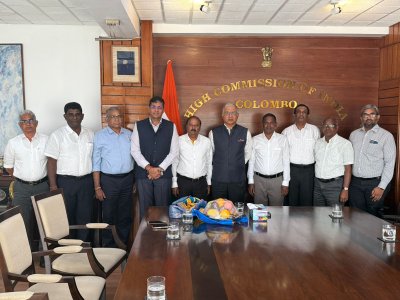
COLOMBO – A recent public appearance by the Indian High Commissioner to Sri Lanka, Santosh Jha, has ignited a firestorm of criticism across social and political circles in Colombo.
The envoy’s participation in a blood donation drive organized by the Arunattu Vellalar Sangam (AVS)—an organization explicitly rooted in a specific Indian sub-caste—has raised serious questions about whether New Delhi is subtly exporting its “caste-politics” to Sri Lankan soil.
A Breach of Diplomatic Neutrality?
While blood donation is a noble humanitarian cause, the choice of host has turned a charitable act into a diplomatic minefield.
Senior journalists and social activists in Colombo have been quick to point out that diplomatic missions are duty-bound to remain neutral and engage with broad-based civil society, rather than exclusive, identity-driven groups.
“The High Commission represents the secular Republic of India, not specific caste interest groups,” said a veteran political analyst. “By officially endorsing a camp organized by the AVS, the High Commissioner has inadvertently—or perhaps intentionally—given a stamp of legitimacy to caste-based mobilization in a country that is fighting to move past such regressive social hierarchies.”
Sri Lanka’s Stance: A Rejection of the Caste Model
The controversy is particularly sensitive because Sri Lankan society, though not entirely free of social stratification, has historically rejected the rigid and often violent caste frameworks prevalent in India. The island nation prides itself on a social structure influenced more by Buddhist egalitarianism than by the Varna system.
The move is being seen by critics as an “unwelcome import” of Indian social divisions. Critics argue that, Promoting Tribalism which is Engagement with caste-based organizations, encourages the formation of “echo chambers” based on birth rather than shared national identity.
Eroding Progress, where Sri Lanka has spent decades promoting social mobility; critics fear that foreign diplomatic recognition of such groups could revitalize dormant caste sentiments.
Political Optics: There are whispers that this move is a calculated attempt to woo specific segments of the Tamil-speaking community, effectively using caste as a tool for “Soft Power.”
The High Commission’s Silence
As of this morning, the Indian High Commission has not issued a formal statement regarding the criteria used to select partner organizations for public appearances.
While the mission frequently engages in “Neighbourhood First” initiatives, this specific association has left a bitter taste for those who believe that diplomacy should be “caste-blind.”
Whether this was a simple scheduling oversight or a shift in India’s diplomatic outreach strategy, the message was sent to the Sri Lankan.
The public is clear: the lines between humanitarian aid and identity politics are becoming dangerously blurred.