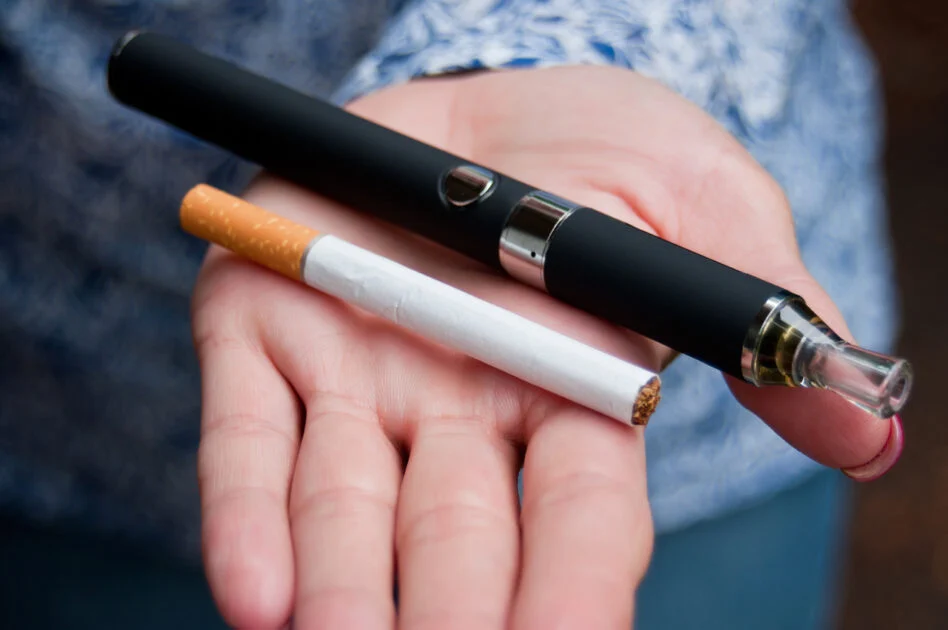
A landmark study has shattered the assumption that electronic cigarettes are a completely harmless alternative to traditional smoking, revealing a direct correlation between vaping and severe, vision-impairing eye disorders.
The comprehensive research, published in the American Journal of Ophthalmology, tracked a massive cohort of nearly 180,000 adults over an average of four and a half years. Rather than finding a health benefit, researchers discovered that former smokers who substituted conventional cigarettes with non-combustible nicotine products faced a distinct, heightened risk of developing blindness-inducing conditions compared to those who quit nicotine entirely.
The Controlled Breakdown
To isolate the true impact of vaping, researchers pulled data from a pool of 179,273 adults with a history of traditional smoking. They utilized propensity score matching—a statistical technique that pairs individuals with identical profiles regarding age, sex, lifestyle habits, and pre-existing medical conditions—to construct two perfectly balanced observation groups:
The Key Findings: Retina Under Siege
Over the 4.6-year tracking window, researchers recorded 6,328 major eye disease events. While complete quitters experienced the lowest rates of ocular deterioration, those who switched to alternative nicotine devices faced elevated metrics across the board:
| Condition Category | Increased Risk for Switchers | Biological Mechanism & Impact |
| Overall Eye Diseases | +7% Greater Risk | General structural decline across a composite of cataracts, glaucoma, and age-related macular degeneration (AMD). |
| Diabetic Retinopathy | +24% Greater Risk | The sharpest spike recorded. Damages the highly sensitive, fragile microvascular blood vessels line the back of the eye. |
| Refractive & Accommodation Disorders | +7% Greater Risk | Severely reduces the eye’s ability to focus clearly on nearby or distant objects, often linked to severe dry-eye surface instability |
The Biological Core: Nicotine as a Vasoconstrictor
The primary driver behind this visual decline is nicotine itself, independent of whether it is burned or vaporized.
Nicotine acts as a potent vasoconstrictor—meaning it chemically forces blood vessels throughout the body to constrict, sharply reducing healthy blood flow. The retina, which functions as the light-sensitive tissue at the back of the eye responsible for capturing images, relies entirely on an incredibly delicate, dense network of microscopic vessels.