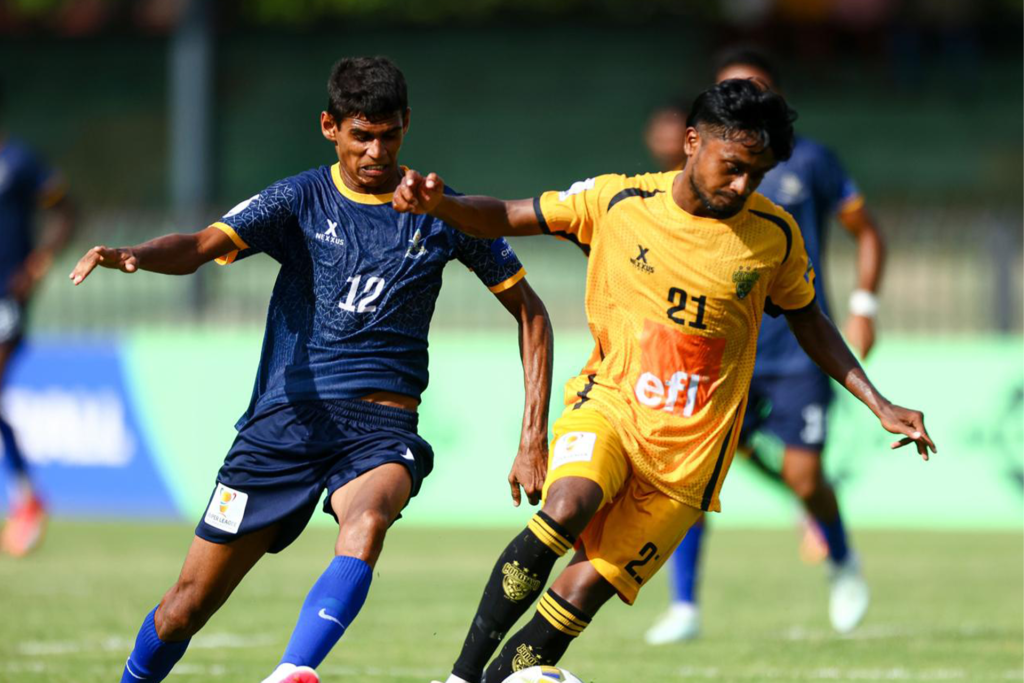
COLOMBO: The second fixture of the Super League Football Championship concluded in a goalless draw between Colombo FC and the Defenders FC, highlighting both the raw potential of youth and the deep-seated structural challenges facing domestic football in Sri Lanka.
The Defenders FC, traditionally a seasoned side representing the Sri Lanka Army, fielded a noticeably younger lineup for this encounter. Despite their lack of senior experience, the youthful squad delivered a resilient performance against a formidable Colombo FC. The standout performer of the match was the Defenders’ goalkeeper, whose crucial saves denied Colombo FC multiple scoring opportunities and secured a hard-earned point for his team.
A Stark Reality Check
For local football enthusiasts accustomed to the high tempo of international matches, the encounter served as a poignant reminder of where Sri Lankan domestic football stands on the global stage. Observers noted that the standard of play in this fixture fell significantly short of the benchmarks set by the current Sri Lanka national team.
Experts emphasize that bridging this performance gap is essential before attempting to restructure the national squad. Elevating the sport requires sustaining the current competitive framework while simultaneously upgrading facilities to enhance international competitiveness.
Tactical and Infrastructural Deficiencies
The match between Colombo FC and Defenders FC was characterized by a noticeably slow tempo and delayed decision-making on the field. The teams struggled with tactical cohesion, frequently failing to maintain possession or execute accurate passes—weaknesses attributed to both technical shortcomings and poor pitch conditions.
“These deficiencies are not merely administrative failures but are symptomatic of a broader poverty of infrastructure plaguing the country’s sports sector,” the report notes.
In a stark revelation of these challenges, it has been reported that certain clubs in the tournament lack access to dedicated training grounds, forcing them to conduct practices in public spaces.
A Call for Collaborative Action
The current situation highlights a critical disconnect: while fans and stakeholders often focus on administrative blame, the foundational crises facing the sport remain unaddressed. There is an urgent need to foster a constructive social dialogue aimed at protecting existing partnerships while shining a light on neglected areas of the game.
To genuinely support Sri Lankan football, stakeholders are urged to:
- Understand the Reality: Attend Super League matches to assess the actual standard of the game.
- Identify Infrastructure Gaps: Recognize the logistical limitations faced by clubs.
- Propose Practical Solutions: Move away from unrealistic demands such as expecting a private stadium for every club—and instead form collectives to optimize existing resources.
The Way Forward
As the saying goes, one must enter the river to learn how to swim. The Super League presents a vital opportunity for Sri Lankan football to navigate its current challenges and learn how to survive and thrive.
This platform allows clubs and development wings to identify obstacles and carve out new strategic directions. Furthermore, football analysts and researchers are encouraged to voluntarily offer data-driven insights to the football administration, pointing out specific tactical areas for improvement.
Ultimately, the match underscored that saving domestic football requires moving beyond narrow power struggles. It calls for a collective, passionate intervention to support the administration and enrich the local game from the ground up.